
Chapter 01
The Observation
Two experiences on the water, one year apart, turned something we initially dismissed into a question we could no longer ignore.
2021–2022
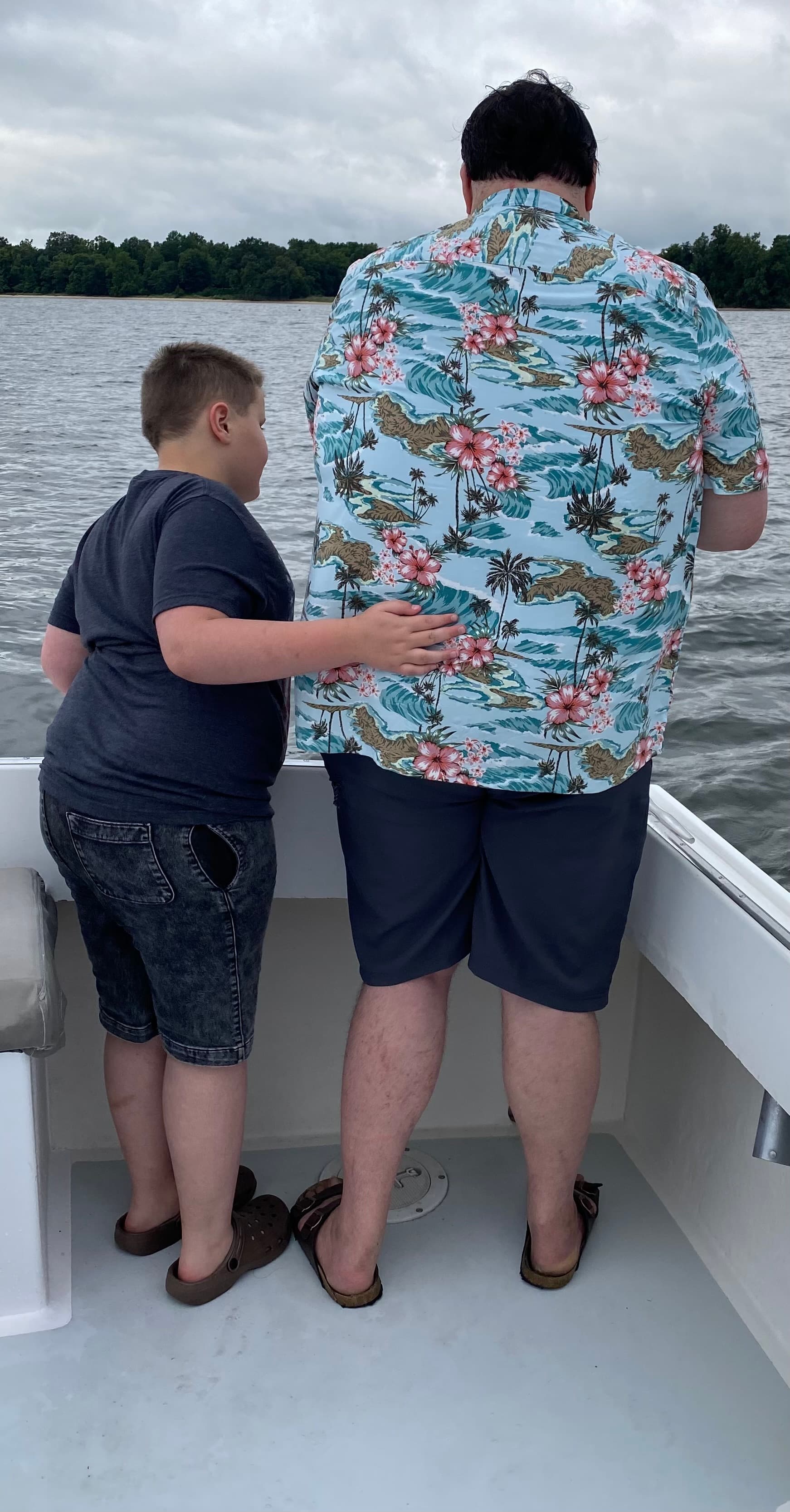
2021 · Chesapeake Bay
The first time, we simply thought he loved the boat.
In 2021, we took our nine-year-old autistic son on a three-hour fishing charter on the Chesapeake Bay. On the boat, he was calm, happy, engaged, interactive, smiling, and visibly enjoying himself. He seemed more present. We thought he simply loved the boat.
What stood out later was that the change seemed to continue on land. For roughly two weeks, we and other people who knew him noticed that he seemed calmer, more engaged, and more present.
These were family observations, not clinical findings. We did not attribute them to the boat. We noted what we had seen and moved on.
2022 · Lewes–Cape May Ferry
A year later, it happened again.
This time, it was much harder to dismiss.
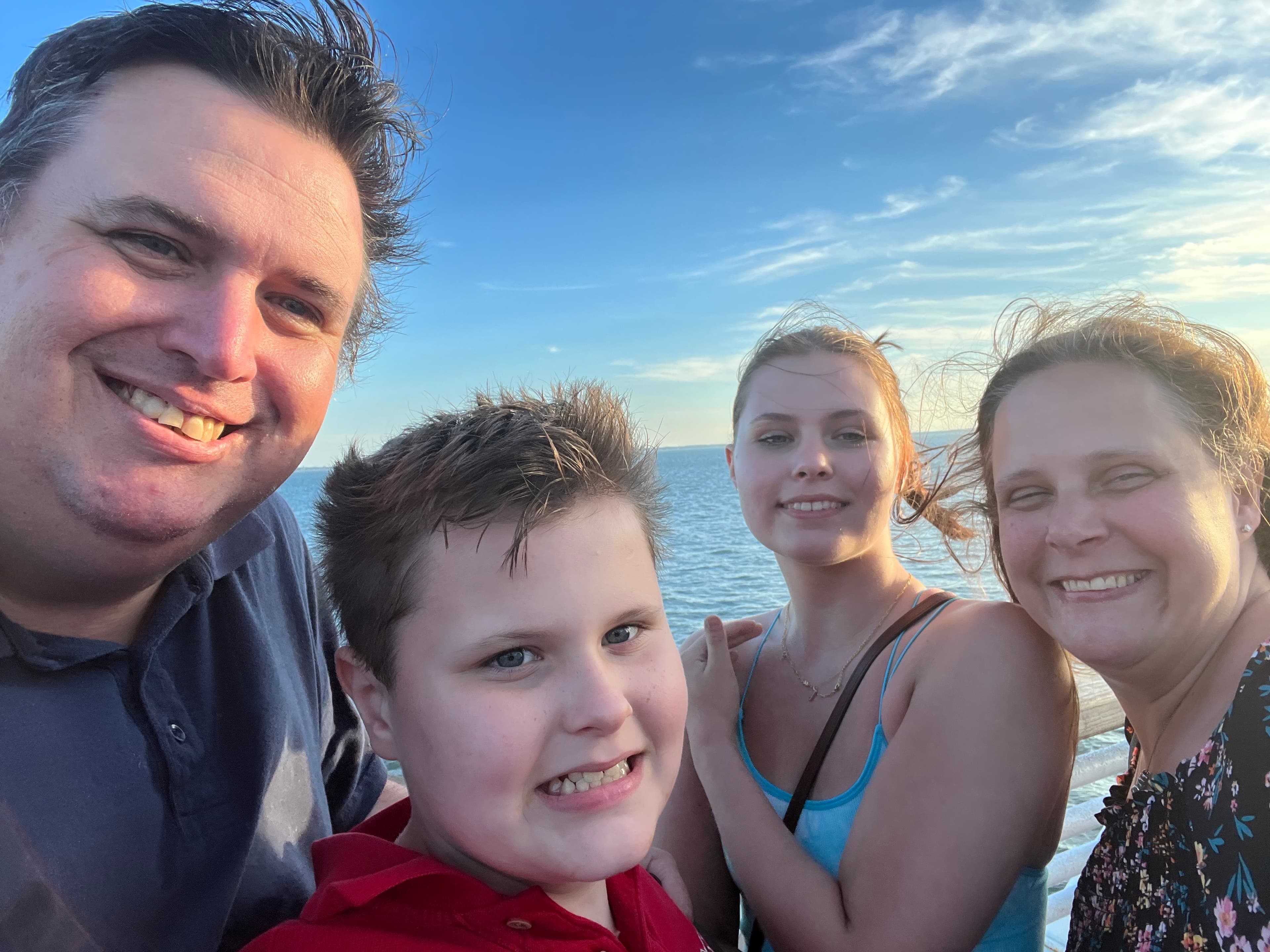
At age ten, our son had recently emerged from a prolonged illness and hospitalization associated with pediatric acute-onset neuropsychiatric syndrome (PANS). We took the Lewes–Cape May Ferry across Delaware Bay. Roughly twenty minutes into the crossing, we noticed a pronounced change: he seemed calmer, his behavioral rigidity was markedly reduced, and he was smiling, interacting, and engaging.
For us as his parents, it felt as though the child we knew had suddenly become accessible to us again after months of profound dysregulation.
After we arrived in Cape May, we got something to eat and spent several hours at a park. He remained calm and content. We then took the ferry back. For roughly two weeks afterward, we observed markedly greater behavioral stability. He interacted more easily, followed instructions more consistently, and severe episodes were markedly reduced. We also observed a return of continence, including overnight.
Again, these were our family’s observations. We did not know whether they were connected to the ferry experience or, if they were, what part of that experience might matter.
The question changed
We were looking at the boat.
We had not yet learned to look at what the boat was doing.
The search
We started asking whether others had seen something similar.
After the ferry, coincidence became harder for us to ignore. We searched for accounts of autistic children on boats and on the water. We encountered sailing programs, special sailing days, and boating programs, along with families describing positive experiences on bays, lakes, and the ocean.
At first, we were not looking at motion. We were thinking of the boat as a complete experience and asking a broader question: What was different about being on the water?
What exactly was different?
We began separating the boating experience into the elements that seemed most obvious.
- 01Wind
- 02Sea spray
- 03Sound
- 04Motion
- 05Fun
- 06Social interaction and activity
One by one, the obvious explanations became less convincing.
During later periods of dysregulation, we informally tried to recreate individual parts of the experience: water spray, a fan, recorded water sounds, engaging or enjoyable activities, and social interaction and activity.
None looked to us like the prolonged changes we had noticed after the boat and ferry. These were informal family observations, not scientific testing.
The first hypothesis
04 / MOTION
Motion was the variable we had not accounted for.
A pattern began to seem possible. Children could encounter wind, water sounds, fun, social interaction, and engaging activity in many ordinary settings where we had not observed the same prolonged pattern. The experiences that seemed most similar to ours often involved discernible movement on bays, open water, lakes with chop, or the ocean.
We began to wonder whether the boat itself was not the important part. The boat was moving. Motion became our first hypothesis: a starting point for a question, not proof of a cause or a treatment.
We finally had a question we could test.
If motion was the variable worth investigating, then the boat itself might only have been the environment in which we first observed it.
That changed the question: could externally applied rhythmic motion be isolated, measured, and studied?