Chapter 03
A Setback That Changed the Mission
We had a hypothesis, a boat, and a plan to learn. Then, before that plan could truly begin, we lost the boat.
2024
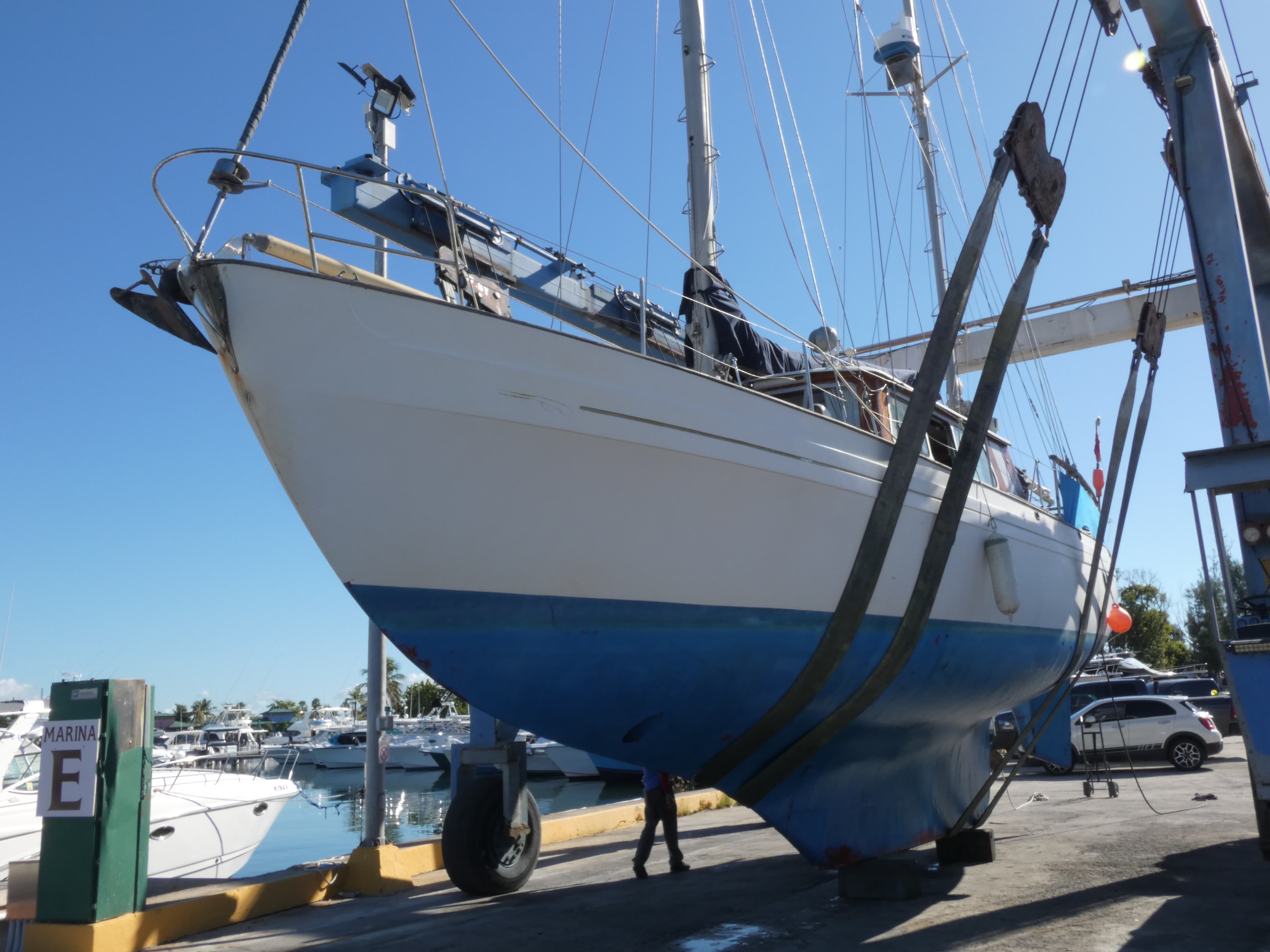
January 2024
First, we had to bring her home.
The 1973 Moody Carbineer 44 was in the Dominican Republic.
To begin the plan we had imagined, I first needed to bring her from La Romana toward Florida.
What was supposed to be a delivery became an experience I would never forget.
The passage
Before we lost the boat, we nearly lost much more.
- 01
Man overboard
There were four of us aboard when one of the men went overboard in the Atlantic.
The captain entered the water after him. Within moments, both men disappeared from sight.
- 02
The search
With both men out of sight, I was left aboard with the remaining crew member. We searched the surrounding water, trying to find them. During that search, I was struck in the head by the boom.
Despite the boom strike, the search continued.
Then I saw them.
We were able to recover both men and bring them back aboard.
- 03
Severe weather
But the passage was not over.
Later, we encountered a severe storm, with winds exceeding 60 knots and seas we estimated at more than 30 feet.
- 04
Inagua
We made for Inagua in the Bahamas seeking refuge.
By the time we approached the island, it was nearly midnight. The channel was unmarked, reefs surrounded the island, and the severe conditions continued.
We found our way through and reached the dock.
Inagua, Bahamas
We made it to the dock.
After the passage, the Moody was secured at the dock in Inagua.
The immediate danger of the voyage seemed to be behind us.
The vessel that was supposed to become the center of our first plan had survived the passage.
Then circumstances changed again.
February 6, 2024
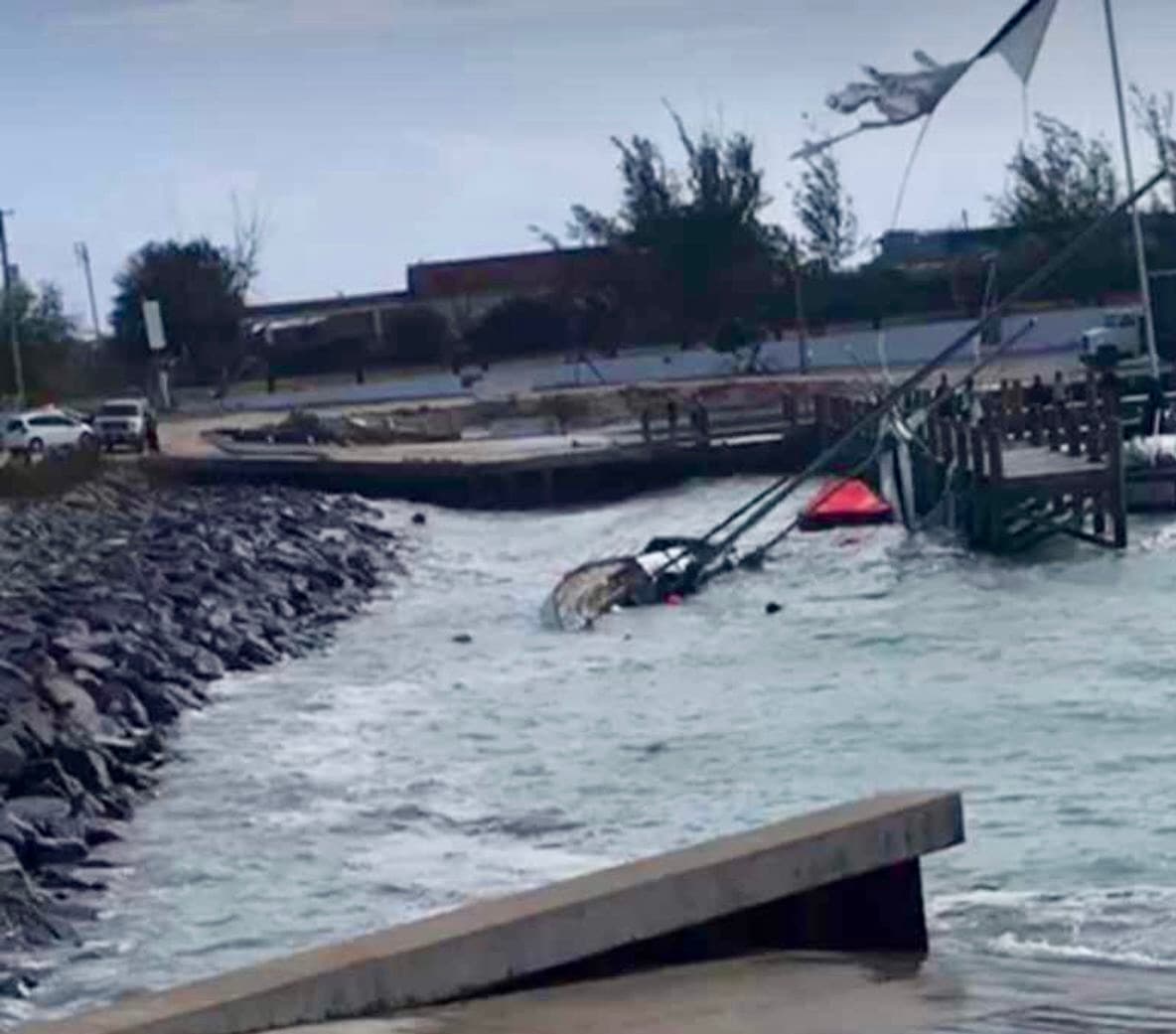
The dock failed.
The Moody remained secured at the dock in Inagua.
Then the dock structure failed.
The vessel was subsequently lost at the dock.
The vessel we had sold our house to purchase, and around which the first version of the SeaKing Solace plan had been built, was gone before that plan had truly begun.
The first plan ended here
We had sold our house to buy the boat.
Now the boat was gone.
And with it, the first version of the plan seemed to be gone too.
What came next
We believed insurance would allow us to begin again.
The vessel was insured.
We believed that meant the financial loss would be recoverable and that, although painful, we could eventually replace the boat and continue.
That did not happen.
The coverage did not provide the recovery we had expected, leaving us without the resources required both to address the loss and simply replace the vessel.
Starting again
For a while, I tried to rebuild the same plan.
My first instinct was not to change the mission.
Losing the boat had changed our circumstances. It had not changed the question that led us to buy it.
It was to replace the boat.
I tried crowdfunding.
I reached out to potential sponsors.
I looked for ways to raise enough money to purchase another vessel and resume the plan we had already built.
The underlying idea remained the same:
Get autistic children and their families onto the water regularly and begin learning from what happened.
But replacing the boat proved far more difficult than we expected.
A different question
Eventually, the problem was no longer just how to replace the boat.
Even if we succeeded, another question had become impossible to ignore.
How many children could one boat actually reach?
A vessel could serve only a limited number of families.
Families would have to reach the water.
Programs would depend on:
- Geography
- Weather
- Vessel availability
- Crew
- Maintenance
- Operating conditions
And if the hypothesis was really about motion rather than the boat itself, rebuilding the entire mission around another boat might simply recreate the same limitation.
The mission changed
We had been trying to bring children to the motion.
What if, someday, we could bring the motion to them?
A new constraint
Losing the boat forced us to think beyond the boat.
The loss did not answer the scientific question.
It did not provide evidence for the hypothesis.
But it exposed a limitation in the first version of the mission.
If externally applied rhythmic motion was ultimately worth studying, access to that experience could not depend forever on owning a particular vessel or living near navigable water.
The question was becoming larger than the original plan.
We needed to understand the motion itself.
We needed to learn how to measure it.
And eventually, we would need researchers who could help determine whether the hypothesis survived scientific scrutiny.
The boat was gone. The question remained.
What began as a plan to bring families onto the water was becoming a question about whether the experience could be understood, measured, and eventually made accessible far beyond a boat.